
Nightline is a listening, emotional support and information charity, run by students, for students.
The first Nightline was founded in 1970, aiming to address high levels of stress, anxiety and suicide amongst local students at Essex University. The idea quickly spread and, in 1973, Edinburgh Nightline was founded. Today there are 36 individual Nightlines in the UK and Ireland, made up of over 2000 specially trained student volunteers. Over 1.5 million higher education students now have access to a confidential, anonymous, non-judgmental, non-directional and non-advisory listening service should they ever need it.
We are proud to have been awarded Nightline of the Year 2023, having been awarded Best Volunteer Training in 2020, Most Innovative Nightline in 2017, and named Best Volunteer Training and Support 2015.
Today we operate a call service and an instant messenger service, open from 8pm to 8am. We aim to support students across Edinburgh, with backing from Edinburgh’s Higher and Further Education Institutions – the University of Edinburgh, Edinburgh Napier University, Queen Margaret University, Edinburgh College, Heriot-Watt University, and West Lothian College.
Meet the team 2026-2027
The vast majority of our volunteers are anonymous, both for the benefit of our callers and for the welfare of our volunteers. So, who exactly are we? Edinburgh Nightline is made up of volunteers from Edinburgh’s higher and further education institutions. Our volunteers are from different disciplines in various years of both undergraduate and postgraduate degrees, as well as a small number of recent alumni volunteers to help keep the service running.
Seven of our committee are what we call public faces. Due to the nature of their work with us they must be able to speak publicly as representatives of Edinburgh Nightline. During the volunteer’s time in this position they don’t take calls. The seven positions fall across four roles: the Coordinators, the Publicity Coordinators, the Training Coordinators, and the Inclusion Coordinator.
Coordinators
The Coordinator role involves overseeing the organisation and its committee. Coordinators are responsible for chairing meetings, managing committee relations, maintaining communication with our stakeholders, liaising with the Nightline Association, and generally keeping up and working to improve the service that we provide. This role often involves individual projects that change depending on the current needs of Nightline and what the coordinators themselves feel would be a impactful step forward.

Alicia
she/her
Alicia is a Psychology graduate from Aberdeenshire who, like many before her, discovered that leaving academic study behind was significantly easier than leaving Nightline behind. She now works at Scottish Action for Mental Health (SAMH) and spends her free time feeding her love for music, and her family and friends. Armed with an alarming amount of optimism, she is also currently learning how to dance in heels – a hobby that keeps her humble.

Gabby
she/her
Gabby is a psychology grad who is studying for her Masters in Clinical Health Psychology in Glasgow (the wrong city oops). Outside of university and Nightline she enjoys going to rock and metal concerts with friends, and de-stressing by attending archery practice and reading anything she can get her hands on.
Publicity Coordinators
The Publicity Coordinators manage publicity for Edinburgh Nightline. Their aim is to make Nightline visible in their campuses through stalls, advertising and events. They publicise our amazing service across Edinburgh! This involves distributing publicity materials such as stickers, posters, flyers and postcards, reaching out to organisations and collaborating with different societies.

Ashley
she/her
Ashley is a burnt-out Physics graduate who joined Nightline on whim whilst bored waiting for a meeting. She likes boardgames, swimming and anything that distracts from looking for a job. Mostly she feels that she joined Nightline too late and wants to stop others from making the same mistake.

Charley
she/her
Charley is a psychology and marketing student who loves figuring out what makes people tick (in a non-creepy way!). When she’s not studying, she is usually reading, spending time with friends and family, or being bossed around by her cats. She is excited to get involved in volunteering and make a positive impact.
Training Coordinators
The Training Coordinators oversee training within Edinburgh Nightline.
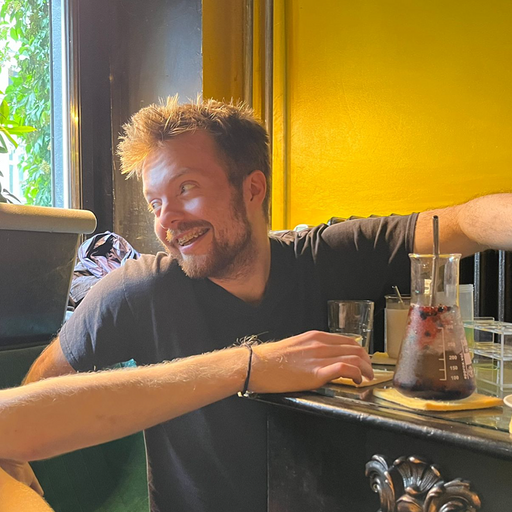
Oscar
he/him
Oscar is a History and Politics graduate from Leith who recently spent several years focusing on Nightline instead of finishing his masters. He’s now working full-time as a volunteer coordinator for Childline and loves reading, cycling and playing old video games in his free time.

Cian
he/him
Cian is a postgrad of psychology and management at HWU. He loves nightline so much, he even lives with his fellow training Coordinator, Oscar and has 3 main hobbies in life: The Beatles, being overly competitive in board games and Heart of Midlothian.
Inclusion Coordinator
The Inclusion Coordinator is our first port of call for all inclusion queries, both internally and externally. Their role is to help us understand and adapt the way we do things to make sure we’re never excluding anybody. Our Inclusion Coordinator is here to represent minorities, but never to speak for everyone. They work closely within our organisation to make sure that everyone is seen and heard.

Sara
Sara is a soon-to-be psychology grad. Now that she’s been freed from UOE main library, you can find her speed walking across Edinburgh to see her friends, bartending, playing the piano and enjoying hikes!
Our Principles
Nightline adheres to six principles:
Confidentiality
Anything talked through with a caller remains completely private. Discussing calls would be both disrespectful and unprofessional and would undermine the service we aim to provide for our callers. You can find our Privacy and Confidentiality Policy here. You can find our Safeguarding Summary here.
Anonymity
All of our volunteers are anonymous. Seven public faces represent our service publicly and no longer take calls, but these are the only exceptions to our strict anonymity policy. We do this to ensure that callers aren’t discouraged to call due to fear that someone they know may answer, but also to prevent stereotyping of our volunteers based on one person a caller may know.
Support
The concept of empathy guides everything we do. Empathy, unlike sympathy, is the capability to share and understand another’s feelings without diluting support with pity. We use empathy to listen, not judge or advise, in the hopes that a supportive, neutral ear can help callers sort through their emotions. We also endeavour to support our fellow volunteers, both while on shift and within the organisation generally.
Non-Judgementality
We strongly believe that the role of our listening volunteers is not to let their personal views or opinions influence how they take a call, even when these differ from the caller’s. We are here to listen, not to judge.
Additionally, non-judgementality involves not making any judgements about what callers’ situation are like or what callers should do.
Non-Directionality
Only the caller decides the direction of the call. As Nightliners, we can never know the full situation from one contact, and therefore any conclusions we draw may result from misunderstanding. Our volunteers are not qualified to give advice but can offer information and will listen and support for as long as this is needed. Non-directionality involves not giving the caller advice, opinions, discussing personal experiences, or directing the flow of the conversation.
Commitment
Nightline is a student-run organisation through and through. As such, we require a certain level of sustained involvement from our volunteers to continue running our service.
What to Expect
We want to give you the best possible service. Calling a helpline can be scary, so this section lets you know what to expect and hopefully eases any worries you have.
Confidentiality
Is what I tell you confidential?
Absolutely. Any and all details of phone calls and instant messenger chats are kept confidential. We do not hold any of your personal information and we do not discuss any of our calls. Volunteers will never ask for personal details from you. However, there are exceptional circumstances when these principles don’t apply; for details and exceptions, please see our Privacy and Confidentiality Policy.
So, whatever I say is between me and you?
There are always two volunteers present during a call. One volunteer will be receiving your call, speaking and listening to you, whilst the other is listening to the call via earpiece. Having a second volunteer present is crucial to us providing quality control for our service, and also enables us to support our volunteers. The second (listening) volunteer will not be able to speak during your call. Your call will never be recorded.
I have called/messaged previously – can we pick up from what I talked about before?
We take every call or chat individually which means that we cannot discuss the content of previous calls, even if they claim to be from the same caller. If a caller has contacted Nightline previously, they should not expect our volunteers to know what has already been discussed but should instead give a brief summary of relevant thoughts at the start of the call.
Availability
I am finding it difficult to reach your service… why is this?
Whilst we endeavour to reach all our calls, as a volunteer run service, on busy nights we sometimes do not have the capacity to reach all calls. We are always working on ways to improve this so please do not be disheartened if we do not answer your call the first time, we may be busy taking another call. We will never knowingly miss a call or hang up. If we do abruptly hang up, this may be due to a fault in the line or the network — please call back as soon as you can.
Limits of Service
Can you give me advice?
Nightline is not an advice line, so we cannot provide you with any advice. We are here to listen. A volunteer can provide you with information, if requested, such as taxi numbers, exam times, business opening hours, contact information for health services, etc. If you do request information, we will keep you on the line while we search for your request. Very rarely, we may ask you to call back if it is taking our volunteers longer than expected to locate a suitable resource.
How long can I talk to you for?
There are no time limits on call duration. Our volunteers will listen for as little or as long as you like. If a call has been silent for some time, the volunteer may end the call (or IM chat), in case of a connection fault. If this happens by mistake, please do not hesitate to call back.
Can you call somewhere for me?
If a caller feels that their own life is at imminent risk for any reason, they may request for our volunteer to call for help on their behalf. This is the only situation where a call can be placed on behalf of a caller. In this situation, the volunteer will need some identifying details from the caller to pass on to emergency services. These details will not be passed on to any other individuals or recorded by our volunteers in any way and will only be used for the purpose of dispatching an ambulance to an accurate location.
Can I talk to you about anything?
Yes, we are a listening service and are available to listen to you talk about anything, no matter how big or small you feel it is. We have some policies in place to protect our volunteers from calls that are manipulative, abusive, or excessively detailed. We will give a warning explaining which of these policies are being breached, but if the caller continues to act in this way the call will be terminated. Under no circumstance will we accept calls in which the caller is masturbating.
As a non-judgemental service, we generally will avoid labelling callers in any way. We do however have two exceptions to this. Where a caller seems to be broaching the topics of rape or suicide we may introduce these terms before the caller has used them themselves. This is because our research has shown that in these circumstances it is helpful to broach the subject with these words. If you ask us to avoid these terms we will be happy to do so. Please note we may not necessarily use the legal definition of rape but use the term to refer to non-consensual sexual acts.
Volunteer response
Why do you sound like that? – Phone calls
You may immediately notice that our volunteers speak in a slow and quiet voice on phone calls. They do this to provide a soothing and neutral tone throughout the conversation, and to act as a calming influence for any distressed callers. If you prefer, or if you are struggling to hear them, our volunteers are more than happy to speak a little louder on request.
You sound robotic… am I talking to a real person? – IM
All responses are thought and typed out by the volunteers taking the call. Two volunteers will work together when responding to an online chat. We work hard to support you as best we can, but please understand that, due to our commitment to being non-directional, and because we are here to listen and support you without giving advice, you may occasionally feel that Instant Messenger can seem a little robotic. Whenever and however you contact us, you are always speaking to a real volunteer.